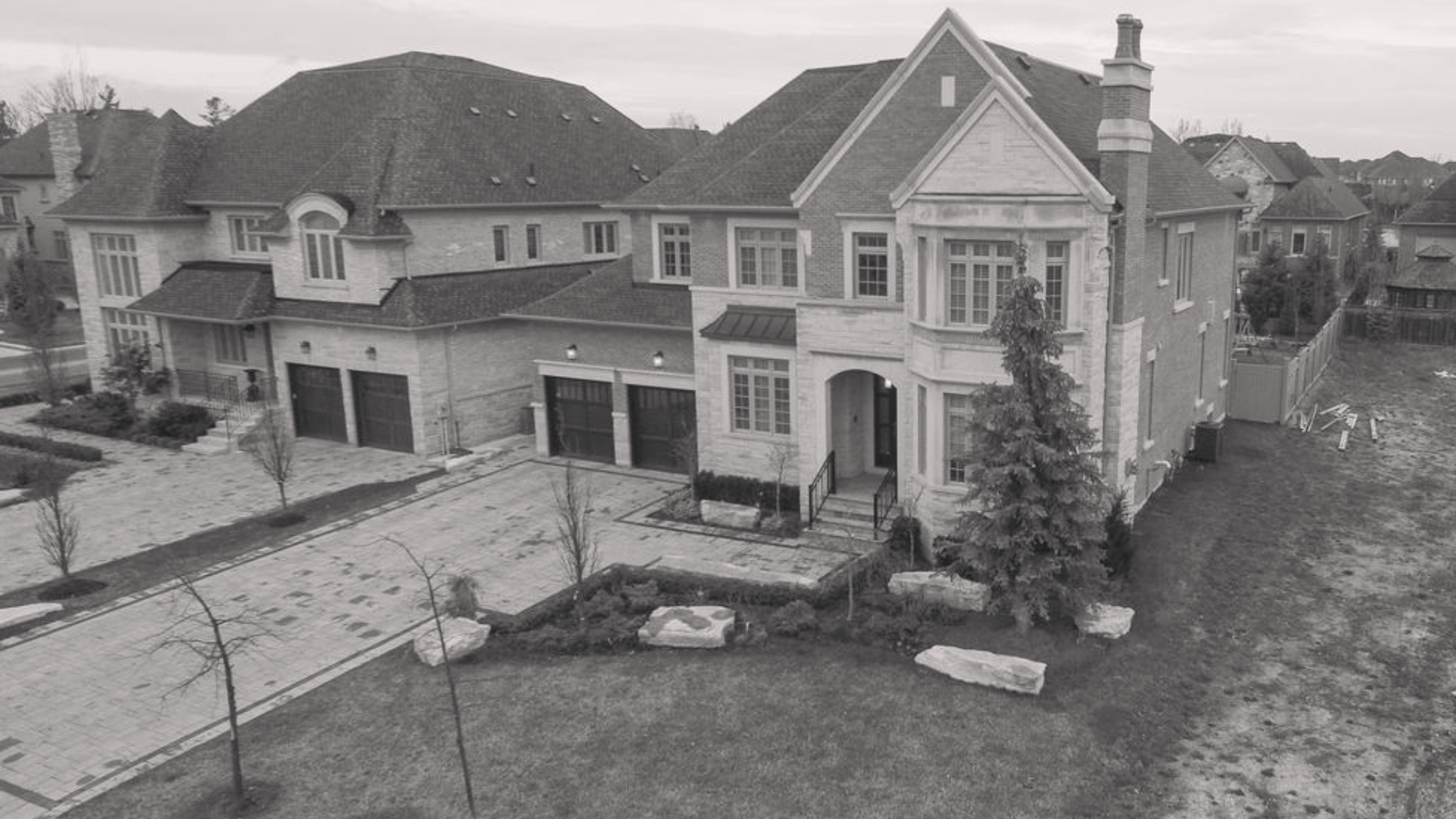
Architectural Styles Builders Rarely Build Anymore (And Why)
Why don’t builders build Victorians anymore? Or Tudors, or a French Country? Is it too expensive? Did they just get lazy? Let’s break it down.
When driving through an older neighbourhood, you’ll see a Victorian with a wraparound porch or a Tudor with real timber detailing, and wonder why nothing like them exists in any new subdivision these days. We assume the answer is that builders got cheap, or buyers stopped caring, or it’s just too much work.
By the end of this post, you’ll know three reasons a style disappears from new construction. Let’s walk through five styles people ask about most, and what’s actually keeping each one off the market.
Victorian
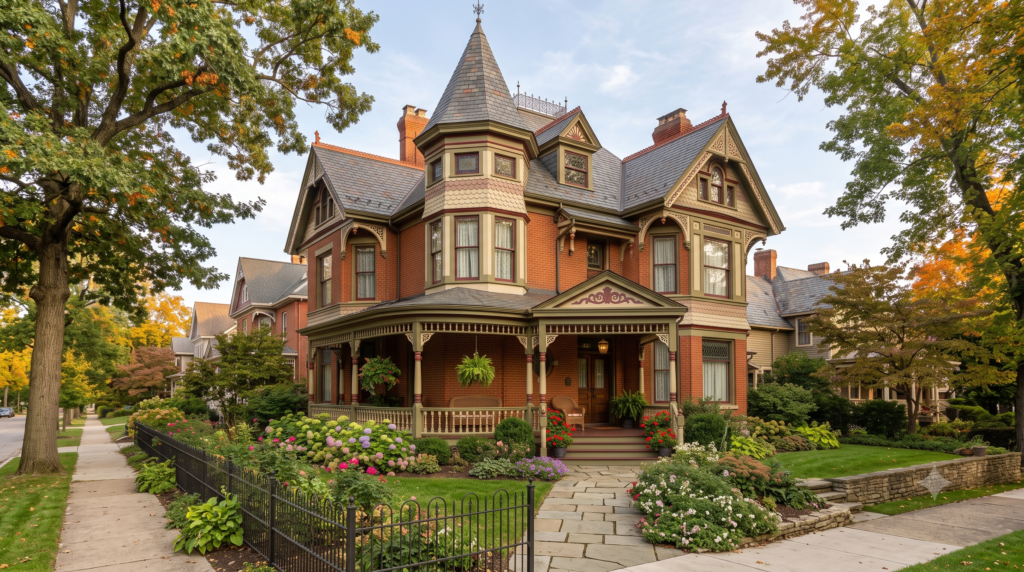
Victorian homes are defined by steep, complicated rooflines, turrets, wraparound porches, and an enormous amount of ornamental millwork — turned spindles, brackets, gingerbread trim running along every eave and gable.
Here’s the thing about all that detail: almost none of it is structural — all of it is labour. That decorative woodwork comes from trades that specialize in exactly this type of detail. Every piece of trim on a new Victorian is either custom-milled at a real premium, or approximated with a synthetic stand-in that never quite has the same presence.
And then there’s the roof. All those intersecting planes and valleys mean more framing labour up front — and more long-term leak risk than almost anything else you could build today. Keep that word “roof” in mind. It’s going to come up again.
French Country
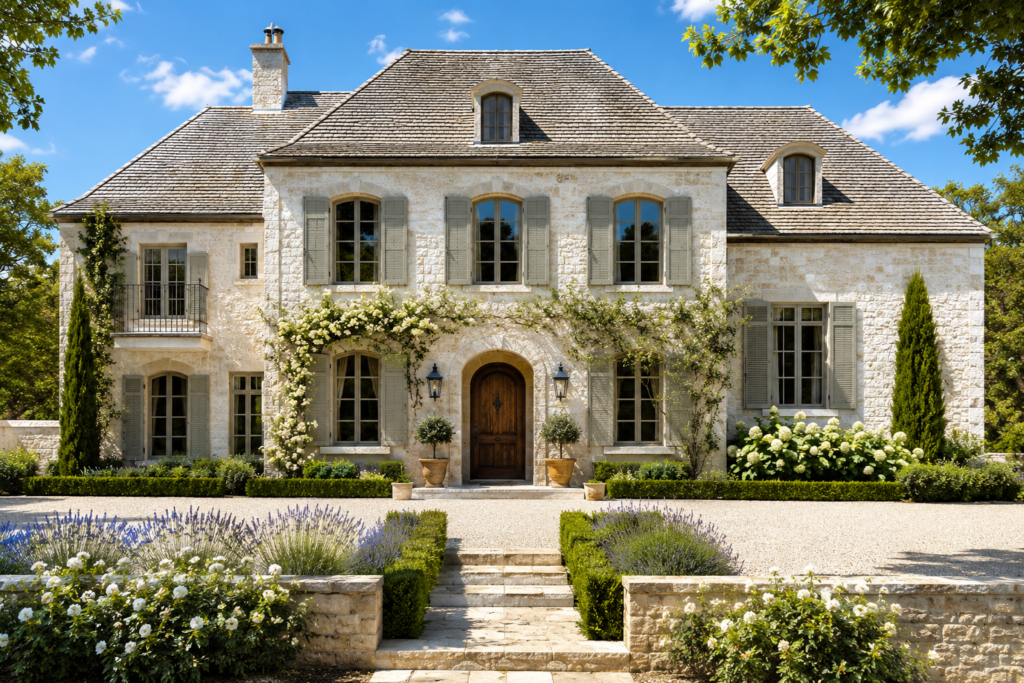
The main features of a French Country style home are masonry, symmetrical massing, hip roofs, and arched openings.
This one’s actually still built fairly regularly, but almost exclusively at the higher end of the market, and the reason is straightforward: creating the features above is expensive and slow. Skilled masons cost more per hour than a standard siding crew and are harder to book, and a full stone or brick exterior is something a production builder running sixty houses a year simply cannot absorb across an entire subdivision.
It’s not that French Country doesn’t work anymore. It’s that it only pencils out on a lot count of one — not sixty.
Craftsman
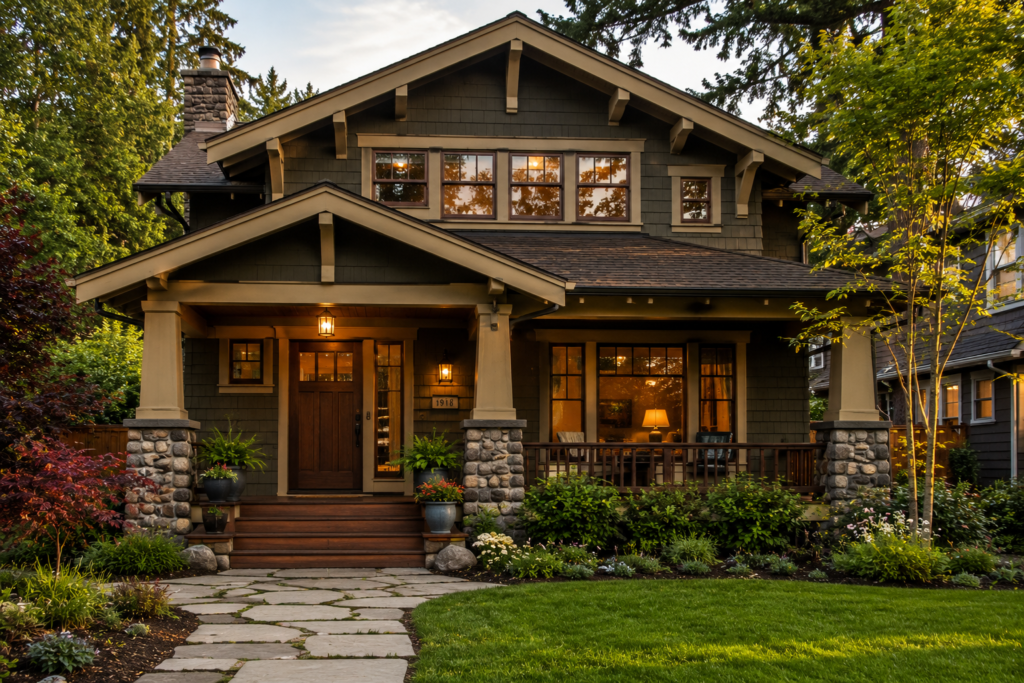
You’ll still see Craftsman-influenced production homes everywhere — a tapered column here, a gable end there — because that’s cheap to fake in a standard production package. It doesn’t cost much to nod at the style.
But true Craftsman detailing is a different animal: deep roof overhangs with real exposed rafter tails, genuine tapered stone-and-wood porch columns, built-in cabinetry inside the house. That level of true-to-original detail is far rarer, and for the same reason Victorian faded — it’s real carpentry labour, custom materials, and fine detailing, not a floor plan checkbox you tick on a spec sheet.
Tudor
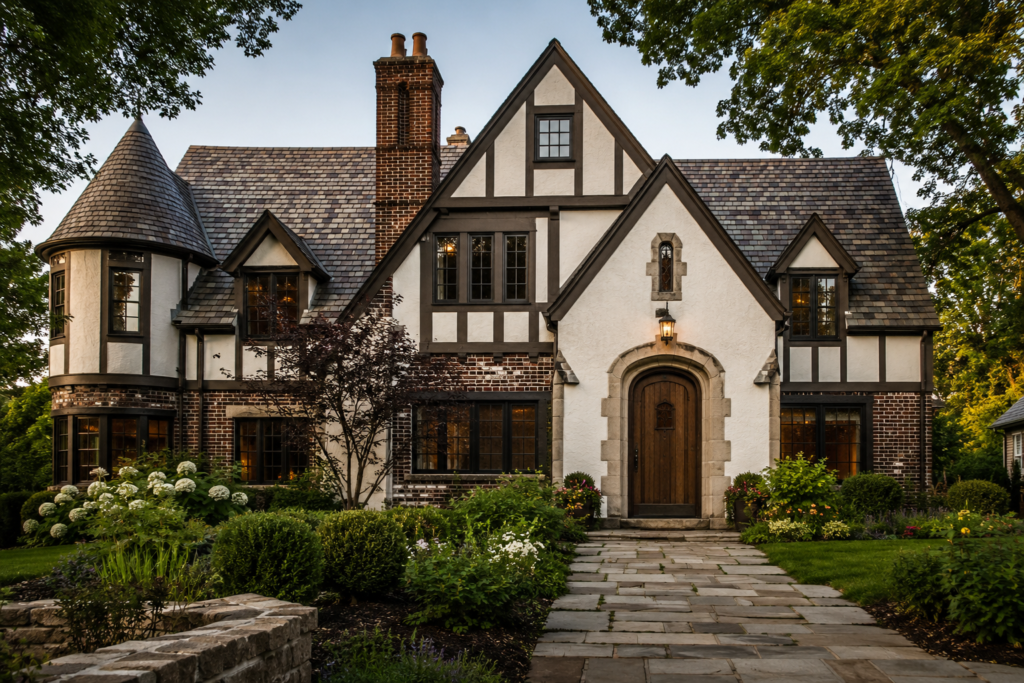
Tudor is probably the closest cousin to Victorian in terms of why it disappeared. Steep, multiple cross-gables, decorative facade detailing, small windows set in custom openings.
Every one of those cross-gables is another roof valley — another flashing detail, another place where water can eventually find its way in over ten or twenty years. A builder standing behind a warranty on that roof is taking on real, ongoing risk. And every one of those custom flashing details and facade elements has to be built by hand, on site — which stretches a budget and schedule that a production builder needs to keep economical and timely.
Modern
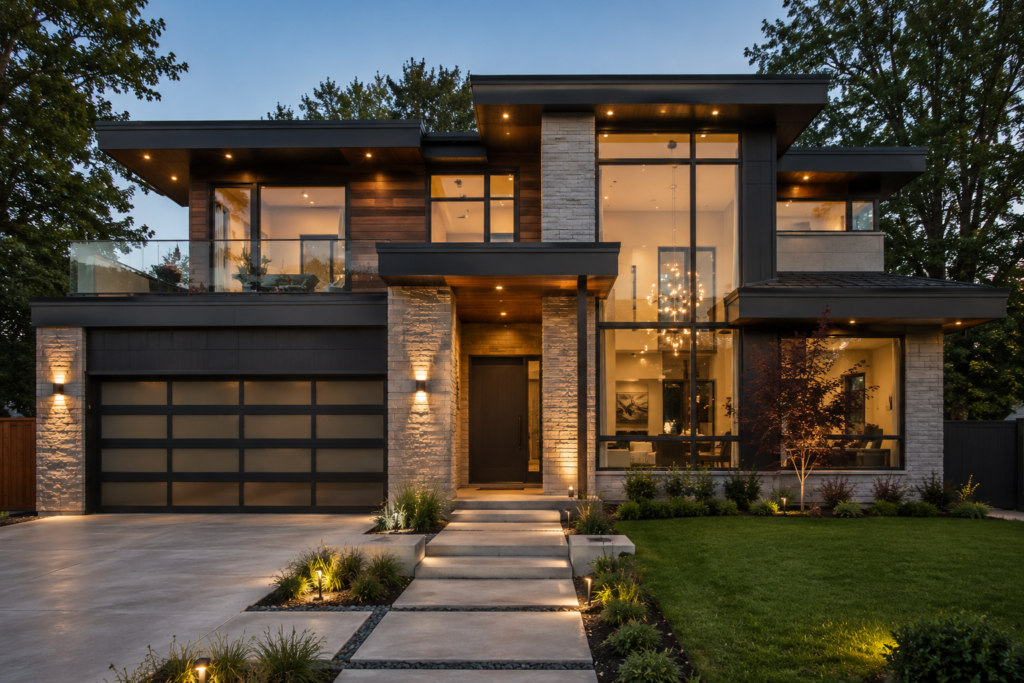
Modern is the interesting one, because the cost driver runs almost backwards from the other four.
There’s very little decorative millwork to worry about — the entire point of the style is clean lines and minimal detail. The cost lives in the systems instead. Large structural spans are needed to support walls of glass where load-bearing wall sections would normally go. Custom window and door packages replace standard sizes almost entirely. And flat or low-slope roofs need a completely different, higher-performance waterproofing membrane than a standard shingled roof.
That flat roof is a warranty risk for the builder in exactly the same way a complex Tudor roof is — just through a different mechanism. Instead of managing water running off multiple valleys, you’re managing water that wants to pool.
The Real Three Reasons
So here’s the actual answer. It’s three things, and they stack on top of each other.
One: roof and envelope complexity. More planes, more valleys, more long-term risk of the one thing a builder’s warranty actually gets tested on — water getting in.
Two: skilled trade scarcity. Masons, plasterers, timber framers, ornamental woodworkers. These trades didn’t vanish, but there are dramatically fewer of them relative to production framing and drywall crews. That makes them more expensive and harder to book.
Three: schedule risk. Natural stone, slate, custom millwork, specialty windows — all of it carries lead times measured in months, not weeks. A production builder’s entire model runs on fast, predictable cycle times, lot after lot. One material on a months-long lead time doesn’t just cost more. It holds up the whole schedule, and the financing carry cost on land sitting idle stacks up fast.
Architectural Control
Here’s the part worth knowing that almost nobody talks about.
Some subdivisions actually mandate a specific style through architectural control guidelines, often something French Country or Craftsman-like, specifically to keep an entire neighbourhood’s look consistent from the street. So style isn’t always a builder’s free choice getting constrained by cost. Sometimes it’s the reverse: a design guideline forcing a style, and cost has nothing to do with the decision at all.
The Bottom Line
The next time someone tells you builders just don’t build Victorians or true Tudors anymore because “nobody wants them” — now you know the real story. It’s roof risk, it’s trade scarcity, and it’s what a months-long lead time does to a build schedule.
If you’d rather watch this than read it, the full video is here: Architectural Styles Builders Rarely Build Anymore (And Why).

You May Also Like
Hardwood Flooring Dilemma: Refinishing vs. Replacing
Transform Your Home With These Interior Features